



My Neuroscientific Discovery
One afternoon, when I was eleven years old, I came home from school to find that my mother had been taken to the hospital — another heart attack, another wound I could not separate from the terror and cruelty she endured inside our own home. I walked into the bedroom, buried my face into the pillows, and wished to vanish from life itself. But beneath that wish was not death. It was the desperate cry of a child whose nervous system had been pushed past every limit. I wanted to collapse into the arms of a loving, protective woman and cry until the pain had somewhere to go. No such arms existed. There was only a child — alone with a grief too immense for his young mind to hold. At eleven, I was already carrying what no child should ever be forced to carry. My emotional world was fracturing. My mind was drowning under invisible weight. And my body had begun showing the symptoms of a suffering that no one around me had the eyes, the tenderness, or the conscience to see. Had anyone taken me to a psychiatrist, a psychologist, or a physician at that age, I believe my condition would have alarmed them. They would have seen a child so consumed by emotional, mental, and physical devastation that institutional care may have been their only answer.


But no such intervention came. No one at home truly looked at me. No one noticed the silent deterioration. No one asked why a child was so wounded, so frightened, so inwardly broken. My illnesses did not arise in isolation — they were the language of a young nervous system crushed beneath pain it had no way to express. I was not merely an unhealthy child. I was an unseen child. And that was the deepest wound of all. My mother moved in and out of hospitals, her body half-paralyzed, her heart broken by the very man who should have protected her. My father spent his days at work, and his mornings and evenings seated for endless hours before a homemade temple, reciting holy scriptures with ritual devotion — while, under the same roof, he despised my mother, abused her, and emotionally abandoned every one of his children. That house was not a home. It was a hellhole wearing the mask of a family. And yet, through all that suffering, I believe one simple, natural act could have begun to heal what was forming inside me. I needed only the sacred freedom to react honestly to the trauma I was living. To cry. To tremble. To break open. To speak the unspeakable. To let my body and heart discharge the unbearable weight they had been forced to contain. But I never found a safe feminine presence with whom I could cry my heart out. I never found the compassionate witness my wounded nervous system was desperate for. Instead, those who glimpsed my need misread it entirely. They judged the cry before they ever understood the wound. They mistook my search for natural emotional release as madness — as weakness — as something to be ashamed of. They saw a "crazy" person.

They did not see a traumatized child seeking the one medicine nature had already placed within him: the natural reaction to unnatural suffering. So I went to the rooftop, hoping I could finally cry my heart out. But even there, no tears came. My body wanted to release the grief. My nervous system wanted to scream. Yet fear held everything inside me—the fear that the whole neighborhood would hear the primal sound rising from the pain of watching my mother live in a private hell created by my father’s cruelty. That afternoon, a strange question entered me: Why are human beings not allowed to cry with the full natural force of what life has done to them? Why must a wounded child bury his tears alive? Why must the most natural human reaction—grief, crying, trembling, screaming—be treated as if it were madness? What felt biologically natural to me was forbidden by society. If I had screamed the way my body needed to scream, the world might not have called it healing. It might have called it a nervous breakdown. And that, perhaps, is one of humanity’s greatest psychological tragedies: society rewards repression and pathologizes release. As Psychologist Sigmund Freud, father of modern psychology, wrote, “Unexpressed emotions will never die. They are buried alive and will come forth later in uglier ways.”

That afternoon, I did not yet have the language for trauma, repression, or the nervous system. But I knew this much: something natural inside me was being forced underground. That question, born on a rooftop when I was eleven years old, became the seed of a neuroscientific discovery I would not fully understand until decades later. But between that childhood feeling and my neuroscientific discovery itself, I had to walk through nearly fifty years of inner hell. It took a lifetime because my discovery challenged everything humanity has been taught about emotional control, repression, mental illness, and the natural biological need to react to pain. Before I share my neuroscientific discovery itself, I must first describe the particular path through hell that led me to it. Many moons after that heart breaking afternoon, a friend gave me a book about an American psychologist, psychotherapist, and writer in Los Angeles who was exploring what may be called natural reactionary therapy—the therapeutic release of buried emotional pain through the body’s own instinctive natural reactions.

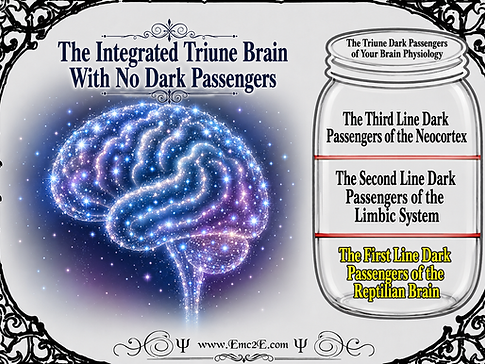
“Since 1969, through fifteen books, numerous scientific papers, and recorded lectures, he has established with unwavering scientific conviction what I instinctively knew as a wounded child: that the human being’s natural reaction to trauma is not weakness, madness, instability, or disorder. It is a foundational biological law of the human organism—a necessary discharge of pain, fear, grief, and terror that the body and nervous system were never designed to repress.” To cry, tremble, scream, grieve, and release pain is not disorder. It is nature attempting to restore order. And when that natural reaction is repressed for years, the buried pain does not vanish. It returns as mental suffering, emotional disturbance, physical illness, addiction, obsession, or self-destruction. That realization became the beginning of my lifelong neuroscientific investigation into the Natural Brain, the Unnatural Brain, and the hidden cost of forcing human beings to bury alive what the nervous system was designed to express. Human beings are born with what neuroscientists have often described as a triune brain: the Reptilian Brain, the Limbic System, and the Neocortex. Each of these brain regions carries its own naturally assigned function, its own evolutionary responsibility, and its own role in the architecture of human survival, feeling, memory, and higher consciousness.

From the moment of birth, and even before the child has language, the human nervous system begins recording experience. When natural reactions to pain, fear, shock, abandonment, or trauma are not allowed to be felt, expressed, and completed, those reactions do not simply disappear. They are repressed. They are buried. They become stored within the hidden layers of the brain and body. In my terminology, the earliest repressions—those formed at birth, during infancy, and throughout the most vulnerable first years of life—are stored in the deepest survival structures of the brain, especially what I call the Reptilian Brain. These are the most primal and ancient buried reactions. I call them the First Line Dark Passengers. The repressed reactions formed during childhood, when the emotional life of the child is developing through attachment, fear, love, shame, rejection, and unmet need, belong to the second great layer of suffering. These are held within the emotional circuitry of the Limbic System. I call them the Second Line Dark Passengers. The repressions formed in later years—during adolescence, adulthood, intellectual life, social identity, ambition, relationships, and conscious memory—are stored in the higher interpretive structures of the Neocortex. These are the more recent, more cognitive, more narrative forms of buried pain. I call them the Third Line Dark Passengers. Thus, the unconscious mind is not a random darkness. It has an order. It has a chronology. It has a biological architecture. The deepest wounds belong to the deepest brain. The emotional wounds belong to the emotional brain. The later conscious wounds belong to the thinking brain. And until these repressed natural reactions are felt, understood, and liberated in their proper order, the human being remains haunted by the very pain that nature once attempted to release. Dr Janov taught me that the art of Natural Reactionary Therapy must follow the same precise order in which the unconscious brain protects itself: last in, first out. It is like opening a jar filled with buried stones. One cannot reach the deepest stone by violently smashing the jar. One must begin at the top. One stone must be removed at a time, in a systematic, organized, methodical order, until the buried layers beneath can finally be reached without psychological chaos.


So, it is with the unconscious brain. The most recent repressed reactions must first be felt, released, and liberated. Then the deeper childhood repressions may rise. Only after that can the most primitive, birth-level, first-line dark passengers emerge from the deepest survival structures of the nervous system. This is not random emotional expression. This is not crying without direction. This is not intellectual conversation about pain. It is the disciplined art of allowing the nervous system to complete the natural reactions that were interrupted, suppressed, buried, and imprisoned at the time of trauma. And yet this sacred natural art is not taught anywhere on earth in its complete natural form. That is why existing therapies do not cure; they manage. They interpret. They analyze. They treat symptoms for a lifetime, while the buried stones remain untouched in the unconscious jar. Instead of liberating the dark passengers, they often cover them with more psychoanalytical dirt—more theories, more drugs, more labels, more explanations, more intellectual dust—until the original natural reaction is buried even deeper. But nature does not heal through endless analysis. Nature heals when the repressed reaction is finally allowed to complete itself. One stone at a time. One buried reaction at a time. One dark passenger at a time. Until the unconscious jar is emptied, the Natural Brain is restored, and the human being is no longer ruled by what was never allowed to be felt.
For decades, I returned again and again to Dr. Janov’s outpatient natural-reaction therapy. Yet one question haunted me with relentless force: Why must I go to an institute in order to experience the most natural reaction of my own nervous system? Why must my body be given permission, only for a few hours, to do what nature designed it to do from the beginning? Each time I completed a session and stepped back into the outside world, I was forced to close the gates of my unconscious mind once more. The pain that had begun to rise had to be pushed back into darkness. The buried grief that had started to tremble toward daylight had to be sealed again. The dark passengers I had begun to liberate had to be returned to their underground prison so I could function in public, wear the mask of normalcy, and survive among people who could not possibly understand the invisible surgery taking place inside me. Then, when I returned to the institute the next day, the same brutal labor had to begin again. The unconscious had to be reopened. The buried pain had to be located again. The nervous system had to be persuaded again to surrender its defenses. The dark passengers had to be summoned again from the sarcophagus of repression. Why?

Why should healing require this repeated violence against the unconscious brain—opening it, closing it, reopening it, reclosing it—when the deeper logic of nature demanded continuity, safety, seclusion, and time? That repeated opening and closing became its own form of torment. It was not merely therapy. It was an exhausting psychological excavation interrupted every day by the demands of ordinary life. So, I asked Dr. Janov this very question. I also offered him my suggestion: an inpatient, 36-day retreat where patients could remain inside a protected therapeutic sanctuary long enough to achieve in thirty-six days what might otherwise take thirty-six months—or even longer. My reasoning was simple, natural, and, to me, irrefutable. Once the unconscious sarcophagus of the brain has been opened, it should not be immediately resealed. Once the dark passengers begin to emerge, they should not be forced back into burial. Once the nervous system begins its natural reaction, it should be allowed to continue in a systematic, methodical, last-in-first-out process until each buried reaction has been felt, released, and liberated.

The unconscious brain should remain open within a sacred, protected environment until the work is complete.
But Dr. Janov’s reply was practical, not theoretical. He told me he did not have the financial resources to build such an inpatient resort retreat—a place where patients could live for thirty-six days without having to close the unconscious jar in which their dark passengers had been buried. And in that answer, I heard the great missing piece. The method existed. The need existed. The natural law existed. But the sanctuary did not. After nearly fifty years of walking through that inner hell, I finally arrived at my neuroscientific discovery: My Neuroscientific Discovery to mend the broken hearts of humanity: Until you feel the natural reaction to every traumatic experience you have endured — as nature commands through your reptilian brain — that brain becomes a graveyard where your buried repressions live, fester, and haunt you from the inside out. Freud understood that what the mind cannot consciously bear, it buries. But burial is never erasure. The repressed does not die — it descends. It sinks beneath the threshold of awareness and continues its work in darkness, shapeshifting into anxiety, compulsion, physical illness, and self-destruction. What you could not scream, your body screams for you. What you could not grieve, your nervous system grieves through collapse. Jung took this further. He saw the unprocessed wound not merely as a personal burden but as a living force — what he called the Shadow. Every trauma you refused to feel, every natural reaction you were forced to suppress, does not vanish. It enters the Shadow and grows autonomous. It begins to run your life from beneath your awareness — driving your fears, poisoning your relationships, and sabotaging your capacity for joy. You do not bury pain. You bury it alive.

And this is the neuroscientific truth at the heart of my discovery: the reptilian brain — the oldest, deepest layer of your nervous system — does not think. It does not reason. It does not negotiate. It only holds. And what it holds without release becomes the architecture of your suffering. Every unfelt fear, every swallowed grief, every suppressed trembling that nature demanded and civilization denied — lives there, encoded in your body, generating emotional, mental, and physical illness from a depth that no amount of intellectual understanding alone can reach. The only way out is through. You must feel what you were never allowed to feel. You must react as nature always intended you to react. Not because it is comfortable — but because your organism was designed for nothing less. Thusly, I discovered the necessity of creating an NRiP Therapy Room inside the home—a private, protected space where a person can safely feel the natural reactions to what they have endured, what they are enduring, and what they may yet endure. In such a room, the unconscious brain does not need to be opened only temporarily inside an institution and then sealed shut again for the world. It can be approached, heard, and released within one’s own sanctuary. The NRiP Therapy Room is therefore not merely a physical room. It is a psychological chamber of return—where the buried reactions of the body, the silenced grief of the child, and the suppressed truth of the nervous system are finally permitted to rise. Naturally, the art of natural reaction must be learned with precision, because there is a delicate line between feeling a natural reaction and entering an abreaction. The psychologist in Los Angeles discovered, practiced, and refined the art of allowing the human being to feel the natural reaction to what life has done to them—with the aim of lifelong curative transformation. In contrast, much of the world madly circled around regression-based therapies, where emotional energy is discharged, but the deeper root of the illness remained untouched. This distinction is crucial. An abreaction of regression therapy may release emotion, but release alone is not necessarily restoration. The deeper work is not merely to discharge buried energy, but to allow the unconscious brain to encounter, feel, and metabolize the original repressed pain in a natural, biologically ordered manner. Modern treatments focus on managing symptoms through lifelong prescriptions. Yet prescriptions are not designed to resurrect repressed traumatic memories into conscious healing. They function to quiet the symptoms while the buried wound remains deeper underground.

Therefore, I further discovered the necessity of Sabeena’s 36-Day Retreats: a structured sanctuary where people can learn the art of natural reaction to the traumas, injuries, humiliations, and heartbreaks they have buried inside the unconscious brain. The purpose is not emotional chaos. The purpose is disciplined liberation. Once the art of natural reaction is learned, the NRiP Therapy Room becomes the essential sanctuary of the home. There, a person can feel the natural reactions to what life has done to them without confusing true liberation with mere abreaction.

This is the great distinction. An abreaction may temporarily discharge dark-passenger energy, but discharge is not the same as cure. The emotional pressure may lessen for a moment, yet the deeper wound can remain buried, waiting to return in another form. Natural reaction is different. It is not chaos. It is not theatrical release. It is the precise inner art of allowing the unconscious brain to meet the original buried pain and liberate it from within. This is why many regression therapies continue for years without resolving the core illness. They may open the wound, but they do not always transform the wound because they don’t know the art of natural reactionary therapy. The NRiP Therapy Room is created for that transformation. It is the home-based sanctuary where the Natural Brain can reclaim what repression once imprisoned.

The practice of natural reaction within the NRiP Therapy Room at home is my neuroscientific discovery.
It is the most consequential discoveries of my life, because if humanity can learn to liberate the dark passengers formed through the repression of traumatic experience, then the brain begins its return toward its natural state—toward love, peace, conscience, and inner wholeness. Nature did not originally design the human being for chronic physical, emotional, and mental suffering. That suffering arises when humanity violates one of nature’s most fundamental principles: every force demands a response. Sir Isaac Newton’s third law states that for every action, there is an equal and opposite reaction. Though Newton spoke of physical motion, the principle offers a powerful psychological metaphor: when life wounds the human organism, the body and brain naturally seek reaction, expression, and release. But when that natural reaction is repressed, the person becomes like a sealed volcano—pressure building silently beneath the surface. For a time, the volcano may appear calm. But the pressure has not vanished. It has merely been imprisoned. And when that buried force finally erupts, it may destroy not only the one who carries it, but also those who stand in its path. Every human being carries an unrelenting inner volcano, formed by years of repressed natural reactions. When grief, fear, anger, humiliation, and pain are buried instead of expressed, they do not disappear; they accumulate beneath consciousness as psychological pressure. Over time, this pressure may erupt suddenly, destructively, and violently—damaging the self, injuring relationships, and disturbing the peace of everyone in its path.

My discovery proposes a natural neuroscientific path for releasing this buried volcanic force before it destroys the person who carries it or the people around them. By allowing the repressed natural reactions to surface, be felt, and be discharged in their proper psychological order, the human being may empty the inner volcano without being consumed by it. All human illness is unnatural in origin. It is created by unnatural choices, unnatural decisions, and unnatural acts that violate the laws of nature. Disease is not nature’s verdict against humanity; it is the universe’s inevitable consequence for humanity’s defiance of the natural law of causation. When human beings refuse to build the NRiP Therapy Room within their homes, they deny themselves the sacred space required to feel their natural reactions to the hurts, wounds, betrayals, fears, griefs, heartbreaks, humiliations, and traumas inflicted upon them by life and the world. Those unfelt reactions do not disappear. They are buried. They are repressed. They are imprisoned within the body and brain. And from that unnatural repression, illness is born.

Based on my own personal experience, and on what I observed during my time at Dr. Janov’s institute, I believe that when the buried “dark passengers” of the unconscious brain are finally liberated through the NRiP Therapy Room—by allowing the body to feel, express, and discharge its long-repressed natural reactions—the nervous system may begin to return toward its natural biological order. From this perspective, hypertension may not always be merely a disease of the blood vessels. It is a biological expression of a nervous system forced to carry unexpressed pain, suppressed terror, unresolved grief, and emotions that were never given a safe place to complete their natural reaction. Therefore, I postulate that the liberation of one’s dark passengers through natural emotional discharge may become a profound pathway toward restoring the body, mind, and nervous system to their original natural state. This is not presented as a substitute for medical care, diagnosis, or treatment, but as my personal neuroscientific postulation based on lived experience, observation, and the biological principle that repression is unnatural, while natural reaction is the organism’s original law of restoration. The purpose of this discovery is not destruction, but liberation: to help every human being release what has long been imprisoned within, restore inner peace, and return to a life governed by love, emotional wholeness, and compassion for all humankind. Based on the neuroscientific discovery described above, I have written a trilogy that presents the theory, the personal assignment, the therapeutic path, and the broader social vision of Natural Brain restoration.

The Psychological Testament of Taylor swift’s Mind: The Nature of Her Brain and the Empire It Built
Book I presents the central theory of the trilogy: the distinction between the Natural Saintly Brain and the Unnatural Demonic Brain. It explains how the repression of natural reactions may alter the human being’s emotional, psychological, and behavioral life, and how this internal distortion can shape one’s choices, relationships, suffering, and destiny. Book II moves from theory into personal application. It assigns the reader the sacred psychological task of identifying, defining, and writing about their own Dark Passengers through a personal life manifesto, guided by the case study presented in the book. It then introduces multiple pathways into Sabeena’s 36-Day Retreats, where the reader will learn the art of natural reaction, begin the liberation of these buried inner forces, and eventually build an NRiP Therapy Room within the home as a continuing sanctuary for emotional release, self-observation, and Natural Brain preservation. Book III expands the discovery from the individual to the nation. It argues that the condition of every country and its citizens is profoundly related to the biological and psychological nature of its leaders’ brain physiology. If a nation is governed by leaders whose brains are ruled by distortion, repression, fear, domination, or unconscious injury, that nation will inevitably reflect those same inner conditions. But if a nation elects government leaders and a political party composed of Natural Brain Goddesses—leaders whose physiology is rooted in love, wisdom, compassion, and restored natural order—then the nation itself may begin to transform into a more peaceful, just, and utopian society, mirroring the Natural Brain physiology of those who lead it. World peace is impossible without peace inside the human mind that governs it. No nation can be truly peaceful while its people remain inwardly fractured. No home can be truly loving while its members carry buried screams inside the unconscious brain. No relationship can become sacred while repressed pain continues to govern human behavior from beneath awareness. This is why I believe the NRiP Therapy Room may become one of the most important discoveries ever offered to humanity. If every home contained a private sanctuary where human beings could safely feel their natural reactions according to the elemental law of nature and the universe, then humanity could begin liberating the dark passengers born from repression. And when those dark passengers are liberated, the brain returns toward its Natural State—toward love, tenderness, conscience, and peace. I say this humbly, sincerely, and with the conviction of a lifetime spent walking through this discovery. So let us begin with the central neuroscientific truth that validates the NRiP Therapy Room in the natural court of the universe: When a human being represses the Natural reaction to trauma, the buried pain does not vanish into silence. It descends into the hidden chambers of the brain. There, unwept, unspoken, and unliberated, it begins to return in darker forms. It returns as distorted behavior. It returns as emotional violence. It returns as the unconscious compulsion to wound others with the very wound that was never healed within oneself. And at its most tragic depth, it returns as The Broken Heart Syndrome — a heart no longer merely grieving the one who broke it, but carrying a vengeance against the whole world for the crime of its own heartbreak.

The next page will examine the above truth through one of its most painful human manifestations:
